
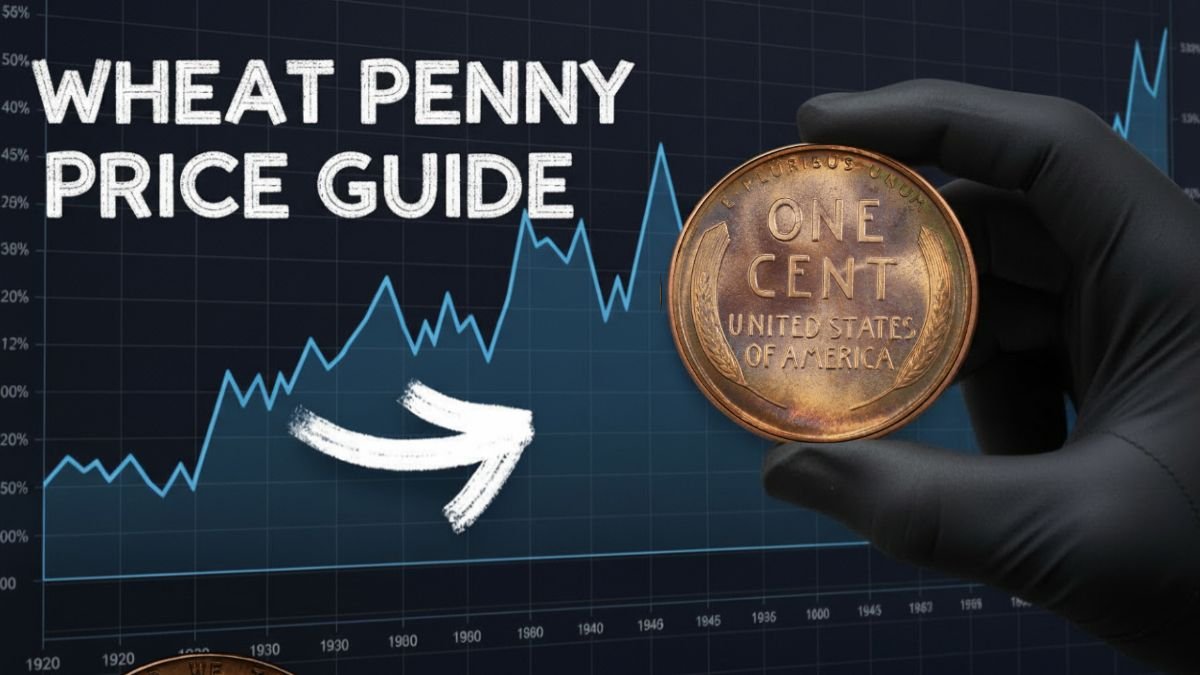
The world of American coins is filled with unique stories, rare collections, and coins worth thousands of dollars. One of these extremely popular and historic coins is the Wheat Penny, often known in India as the “wheat penny.” Minted from 1909 to 1958, these coins remain extremely popular among collectors, especially the Wheat Pennies issued between 1920 and 1945. Among the coins from this period, there are many rare varieties that command prices of thousands of dollars today.
In this article, we’ll explain in a comprehensive, detailed, and completely human way why the 1920–1945 Wheat Pennies are so valuable, how their prices are determined, which years and mint marks are the rarest, and what their grades yield. This article is specifically designed for readers who are new to the world of coins or are already collectors looking for an accurate, reliable guide.
What is the Wheat Penny and why is it so special?
The history of the Wheat Penny is considered a major turning point in the American monetary system. It was issued in 1909 to commemorate the centenary of Abraham Lincoln’s birth. Its reverse side features ears of wheat on both sides—hence its name, the Wheat Penny.
The period from 1920 to 1945 was a period of considerable turmoil for the United States—the Great Depression, World War II, and economic changes affected the minting of coins during that time. This is why many coins from these years are extremely rare and valuable to collectors today. Some pennies were accidentally struck with the wrong metals, some had minting errors, and some were issued in very small numbers. This forms the primary basis for determining value.
Key Features of the 1920–1945 Wheat Penny Series
Pennies issued during this period were mostly made from a mixture of 95% copper and 5% tin/zinc. Only in 1943 were they made from steel, due to a severe shortage of copper for the war effort. This makes the 1943 Copper Wheat Penny one of the rarest coins in the world, capable of fetching over $100,000 today.
Three major mints issued pennies during this period—
- Philadelphia (no mint mark)
- Denver (D mint mark)
- San Francisco (S mint mark)
The number and quality of these three mints varied, so the value of each year’s coins also varies significantly.
How is the price of the 1920–1945 Wheat Penny determined?
The price of the Wheat Penny depends on several factors.
The first is grade. The better the condition of the coins, the higher their value.
Grading is done on a scale from 1 to 70—70 indicates a coin in mint condition, mirror-finished.
Another important factor is the mint mark and production number. Coins produced in a mint in a small number in a given year are naturally rare and valuable.
The third factor is error coins. Many coins have problems like double strikes, off-center marks, die cracks, and metal errors. Such coins can command prices 10–100 times higher than regular coins.
And most importantly—demand. Limited supply and increasing collector demand are driving their prices up year after year.
1920–1945 Wheat Penny Value Chart: Year-by-Year Price Details
Now let’s move on to the part collectors love most—the value chart. Here you’ll find a concise but clear year-by-year breakdown of Wheat Pennies from 1920 to 1945. Keep in mind, prices are based on average market value and vary by grade.
Pennies from the 1920s are mostly copper-based, and coins with the “S” mint mark command higher values than average.
Of coins from 1930 to 1939, the 1931-S is considered particularly valuable.
The period from 1940 to 1945 saw the impact of World War II, with the 1943 steel penny and 1943 copper penny being among the most sought-after coins in the world.
Throughout this period, you’ll notice that photo-fresh or high-grade coins increase in value exponentially. This is why collectors treasure these coins and send them for grading.
The Rarest Wheat Pennies of 1920–1945
It’s worth mentioning some of the coins from this period that are identified as “rare.”
Foremost among these is the 1931-S Wheat Penny.
Due to its low mintage, it commands a high price even in ordinary grades.
The 1922 No D variety is a unique error coin, with the ‘D’ mint mark missing. This minting error makes it extremely valuable.
The 1943 Copper Wheat Penny is considered a global rarity. Its number is extremely low, and any collector considers it a privilege to obtain one. It is a hot topic at almost every auction.
Steel Wheat Pennies struck in 1944 are also among the rare examples struck by mistake. They have gained special significance due to wartime metal shifting.
Important Tips for Collectors – How to Preserve Wheat Pennies?
If you’re thinking of collecting these old coins, you first need to learn how to preserve their condition. Copper is a highly perishable metal, so air, moisture, and hand oils can damage coins.
- So, store coins only in acid-free holders, plastic cases, or albums.
- Never polish them—this will ruin their natural color and value.
If you have a coin from a rare year or believe its condition is unique, having it graded by a professional grading service like PCGS or NGC is highly beneficial. This can significantly increase its market value.
Will the price of 1920–1945 Wheat Pennies increase further?
The copper coin collecting market never stagnates. Every year, new collectors enter the field, driving demand for rare coins. Wheat Pennies from 1920–1945 embody a history of wartime, economic change, and social transformation. This is why they are considered a good long-term investment.
Experts believe that the value of Wheat Pennies will increase further in the coming years, especially for coins with excellent grades or those with significant errors.
Conclusion – The 1920–1945 Wheat Penny: A Collector’s Treasure
A 1920–1945 Wheat Penny collection is not only historically significant, but also a lasting investment. Coins from these years possess rarity, errors, and unique variations that make any collector’s collection unique.
If you’re new to the world of coins, Wheat Pennies are a great choice to start with—easy to understand, beautiful designs, and rapidly increasing market value.
With this comprehensive guide, you should now understand why Wheat Pennies from 1920–1945 are so popular, valuable, and considered rare. If your collection is filled with high-grade coins from this period, rest assured—you have a small but very precious piece of history.
FAQs
1. What is a Wheat Penny?
A. A Wheat Penny is a U.S. one-cent coin minted from 1909 to 1958, featuring wheat ears on the reverse.
2. Why are 1920–1945 Wheat Pennies valuable?
A. They are valuable due to low mintage, rare varieties, minting errors, and historical significance.
3. Which Wheat Penny from this era is the rarest?
A. The 1943 Copper Wheat Penny is the rarest and can be worth over $100,000.
