
Every parent dreams of their child advancing in their education and having equal opportunities in life. But when a child has special educational needs, a planned approach is needed to guide them in the right direction. This is where an IEP (Individualized Education Program) comes in. It is a document that identifies a child’s educational needs, sets goals, and outlines how the school will support them. But before attending any IEP meeting, your preparation as a parent is crucial.
What is an IEP and Why is it Important?
An IEP (Individualized Education Program) is a legal document designed for children who require additional support within the general education system. Its purpose is to understand the child’s strengths and weaknesses and create an individualized education plan. It includes methods for measuring the child’s progress, resources to provide support, and details the role of teachers.
An IEP is important because it ensures that every child receives an education to their full potential. It acts as an agreement between the school and parents so that no child is denied their needs.
Parents’ Role in the IEP
Parents’ role in the IEP process is crucial. No one knows their child better than they do. You have a deep understanding of your child’s daily challenges, interests, and learning styles. When you attend an IEP meeting, your perspective helps teachers and specialists better plan for their child’s development.
Your role is not just to attend the meeting, but to actively participate. Understand your child’s rights, ask questions, and ensure their needs are properly addressed.
How to Prepare Before the Meeting
Preparation is crucial to confidently attending an IEP meeting. First, carefully read your child’s previous IEP documents. See which goals have been achieved and which areas need improvement.
Second, talk to your child’s teachers or therapist. Find out how your child is progressing in school and what challenges he or she is facing. You can also talk to your child to understand things from his or her perspective.
Also, bring all important documents—report cards, medical records, psychological evaluations, and previous IEP reports—with you. These documents will help you speak with concrete examples during the meeting.
Maintaining Confidence at the Meeting
IEP meetings often involve specialists, teachers, and administrative officials. Parents may sometimes feel nervous in such an environment. But remember, this meeting is for your child’s best interests, and you are his or her primary voice.
Remain calm and composed. Listen carefully to every suggestion and ask questions when necessary. If you don’t understand a term or technical language, immediately seek clarification. Be polite but firm when expressing your opinion.
Focus on Your Child’s Strengths
Often, the child’s weaknesses become the focus of discussion at IEP meetings. But don’t forget that every child has strengths as well. Be sure to highlight these strengths.
For example, if your child is good at math or has a special talent for art, include these in the IEP. This will help teachers understand that they can utilize these abilities in other subjects as well.
Adopt a Collaborative Approach
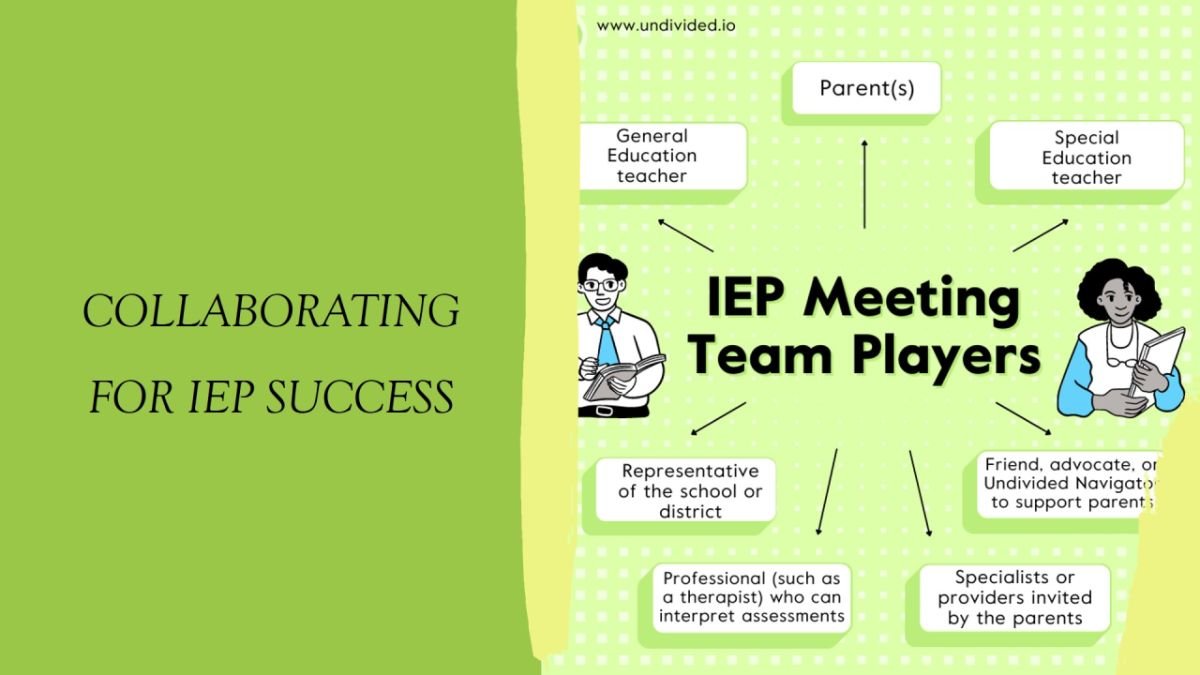
The IEP process is a team effort. It involves parents, teachers, school psychologists, speech therapists, and other specialists. View this process as a partnership, not a conflict.
If there is disagreement on an issue, discuss it calmly and try to find a solution. Your positive attitude and collaborative approach can play a key role in making the meeting successful.
Don’t hesitate to ask questions
Many parents hesitate to ask questions during meetings. But this meeting concerns your child’s future, so it’s your right to understand everything.
If something isn’t clear, ask why the decision was made and how it will impact your child’s education. Asking questions not only provides transparency but also ensures that the IEP doesn’t miss any important points.
Make IEP Goals Realistic
Often, IEPs set goals for your child that are either too easy or too difficult. As a parent, you need to ensure that these goals align with your child’s actual abilities.
IEP goals should be “SMART,” meaning Specific, Measurable, Achievable, Relevant, and Time-bound. For example, “Improving your child’s reading fluency by 20% in six months” is a clear and measurable goal. Such goals guide progress in the right direction.
Follow-up after the meeting
After the meeting, carefully read your copy of the IEP and check that everything that was decided in the meeting is recorded correctly. If anything is written incorrectly, ask the school for a correction.
Also, keep an eye on your child’s progress even after the meeting. Check in with teachers and therapists periodically.
Conclusion
An IEP meeting is more than a formal process—it’s a bridge of collaboration between parents and school. When you prepare for this meeting, you not only protect your child’s rights but also play an active role in shaping his or her future.
